

Why Is It Still Difficult to Find Halal Food in Japan?— What Halal Food Maps Is Trying to Achieve—

■ Introduction
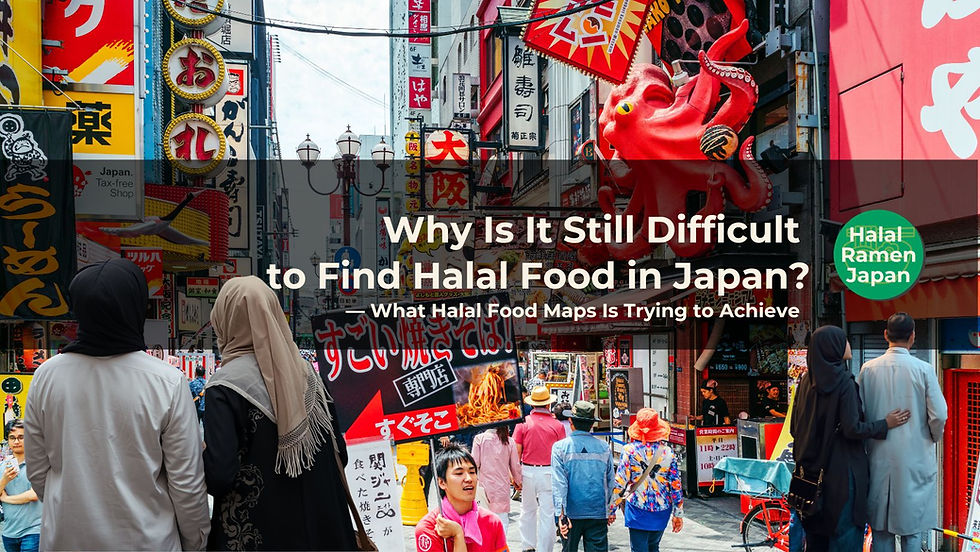
Why is it still so difficult to find halal food in Japan?
Through visiting over 300 restaurants a year,
we have encountered this challenge time and time again.
Many Muslim travelers come to Japan with great excitement about the food.
However, when it comes to dining, that excitement often turns into uncertainty.
“Is this restaurant really halal?”
“Can I eat here with confidence?”
These are not rare concerns — they are part of the everyday experience for many Muslim visitors in Japan.
■ The Challenges We See on the Ground
Based on our observations across various restaurants in Japan,
there are several recurring challenges.
For example, some restaurants clearly use the word “halal”
in their name or descriptions.
However, in some cases, only the meat is halal-certified,
while other ingredients — such as sauces or seasonings —
are not carefully considered.
There are also restaurants that describe themselves as “Muslim-friendly,”
but the separation of utensils and cooking processes in the kitchen
is not always clearly managed, which can create uncertainty.
In addition, Japanese cuisine can be particularly complex to evaluate.
Even dishes that appear to use only fish — such as soups or broths — may include powdered fish stock containing small amounts of animal-derived extracts. In some cases, alcohol may also be used during the production process.
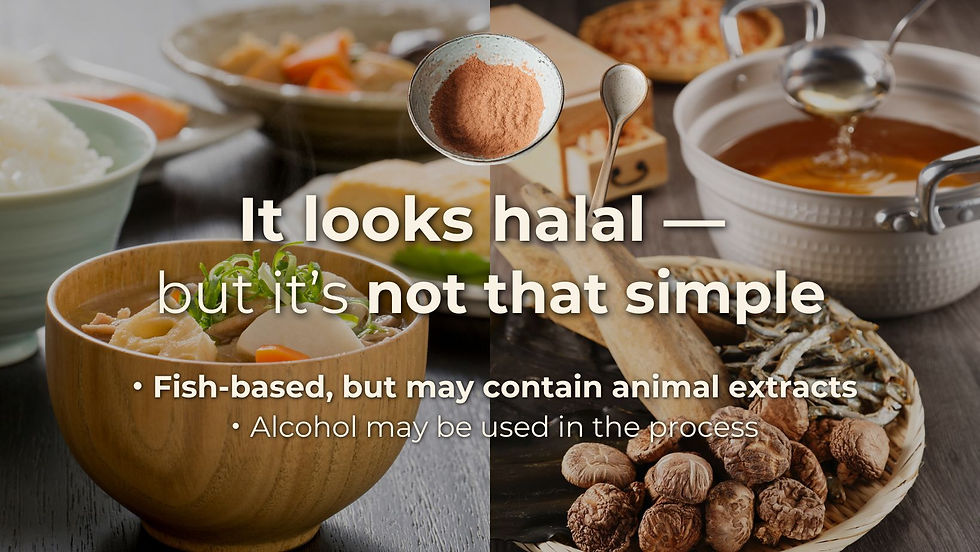
These details are often not visible to customers,
making it difficult for travelers to make informed decisions.
Of course, many restaurants are sincerely working to accommodate Muslim guests.
However, the variation in information and practices
can make it difficult to choose with confidence.
Even small uncertainties can lead travelers to decide not to dine at a restaurant.
■ What Is “Halal Food Maps”?
In response to these challenges,
a new service called “Halal Food Maps” has been launched by Coenavi.
👉 View Halal Food Maps https://halalfoodmaps.com
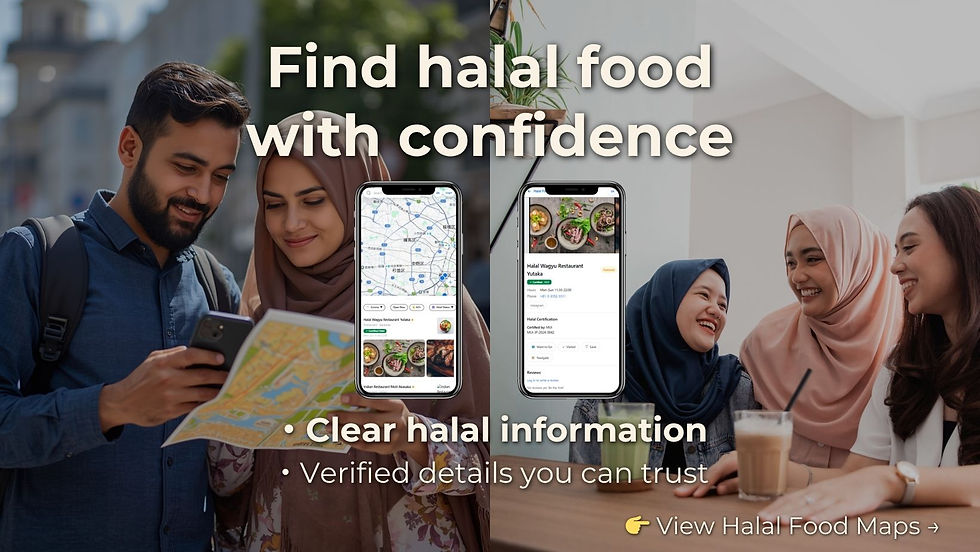
It is designed as a platform that allows users to find halal-friendly restaurants across Japan on a map.
■ What Halal Food Maps Aims to Do
According to the team behind the service,
Halal Food Maps is not just another restaurant listing platform.
Instead, it aims to make the differences in halal practices
more visible and easier to understand.
For example, the service is being developed to organize information such as:
Ingredients used
Cooking environment
Halal certification status
so that users can make decisions based on their own standards.
It also aims to provide a user-friendly experience by combining map-based search with information about nearby prayer spaces,
making it more convenient for travelers.
■ Still in an Early Stage
At the same time, Halal Food Maps has only just been released
and is still in its early stages.
At present:
Not all information is fully complete
The classification of halal levels is still evolving
The team is continuing to refine the platform,
working toward clearer indicators and more reliable data.
They also plan to expand restaurant listings
and improve the overall accuracy of the information over time.
■ What We Hope to See Going Forward
From our perspective, having observed the current situation on the ground,
this kind of initiative is highly meaningful.
Halal practices are not uniform,
and clearly communicating these differences
is essential for helping travelers feel confident.
If Halal Food Maps continues to improve its transparency and clarity,
it has the potential to become a valuable resource
for Muslim travelers visiting Japan.
■ Conclusion
Japan is home to many wonderful restaurantsthat are making efforts to accommodate halal needs.
However, the environment for choosing with confidenceis still developing.
Services like Halal Food Maps may help bridge this gap,making it easier for Muslim travelers to enjoy food in Japanwith greater peace of mind. 👉 You can explore the service here:
We look forward to seeing how it evolves in the future.


Comments